
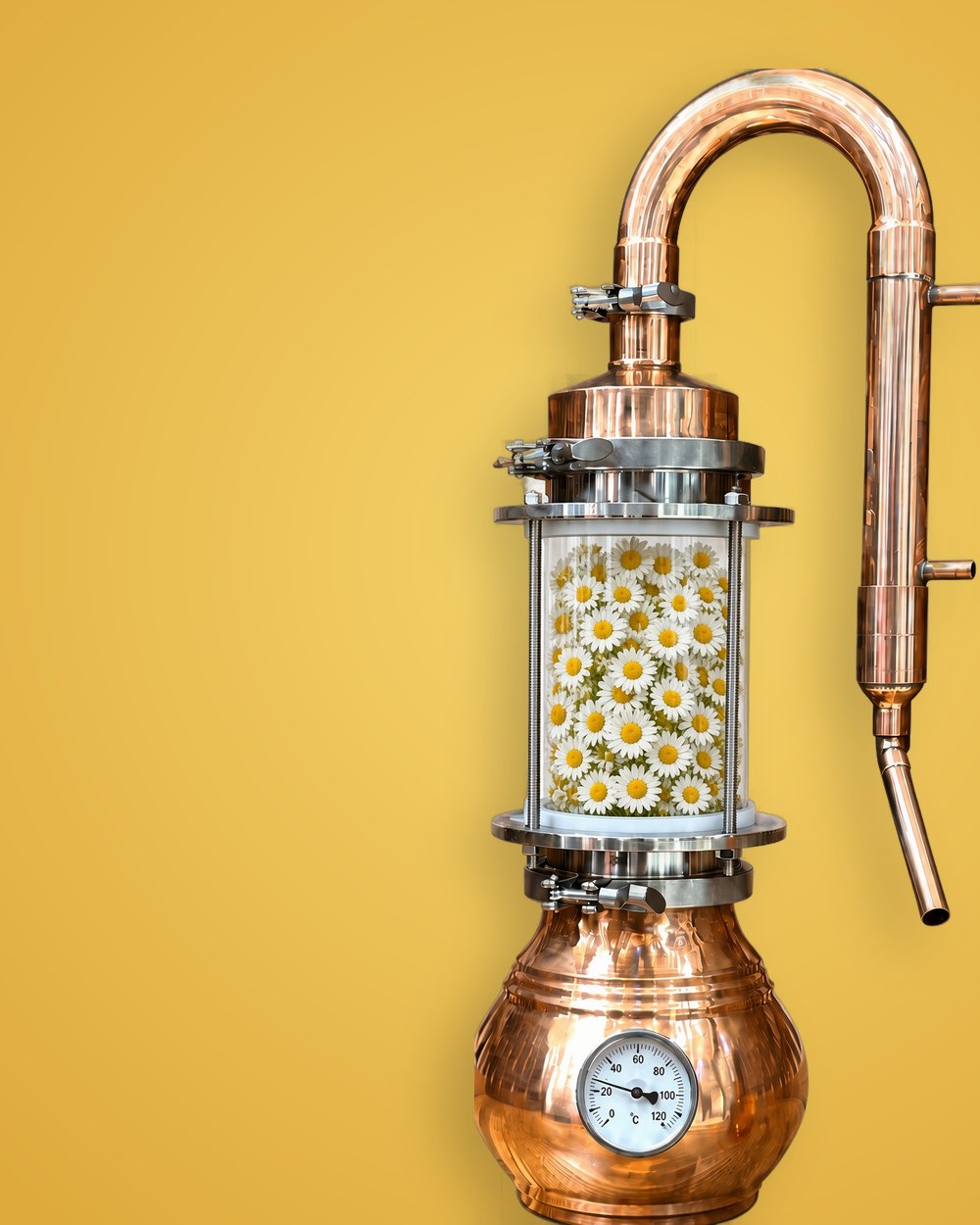
Chamomile is a small, branched plant of 20 to 50 cm with feathery leaves, white petals and a yellow cone in the middle. It flowers from late spring until mid summer, and it is one of the most rewarding plants to watch in a glass chamber.
The easiest way to recognise real chamomile is to cut the yellow cone in half. In true chamomile (Matricaria chamomilla) it is hollow inside. Look-alikes such as scentless mayweed have a solid cone and almost no aroma.
For distillation you use the flowers. Pick them in the morning, when the white petals start to bend downward. You can distill them fresh, or dry them in thin layers in a shady, airy place. Their scent actually gets stronger while drying. Keep dried flowers away from light and use them within a year.
In the still, chamomile gives a soft, gentle hydrosol and only a few drops of essential oil. That oil is something special: it turns deep blue. The colour comes from chamazulene, a compound that forms from the plant's own molecules during steam distillation. You will not find it in the fresh flower, it appears in the still.
Because the yield of oil is small, many home distillers treat chamomile mainly as a hydrosol plant. Fill the basket loosely so the steam can pass evenly, and take your time. Watching the white flowers in the glass column while the first drops fall is half the pleasure.
Have you ever seen blue chamomile oil? Tell us about your first chamomile session.