
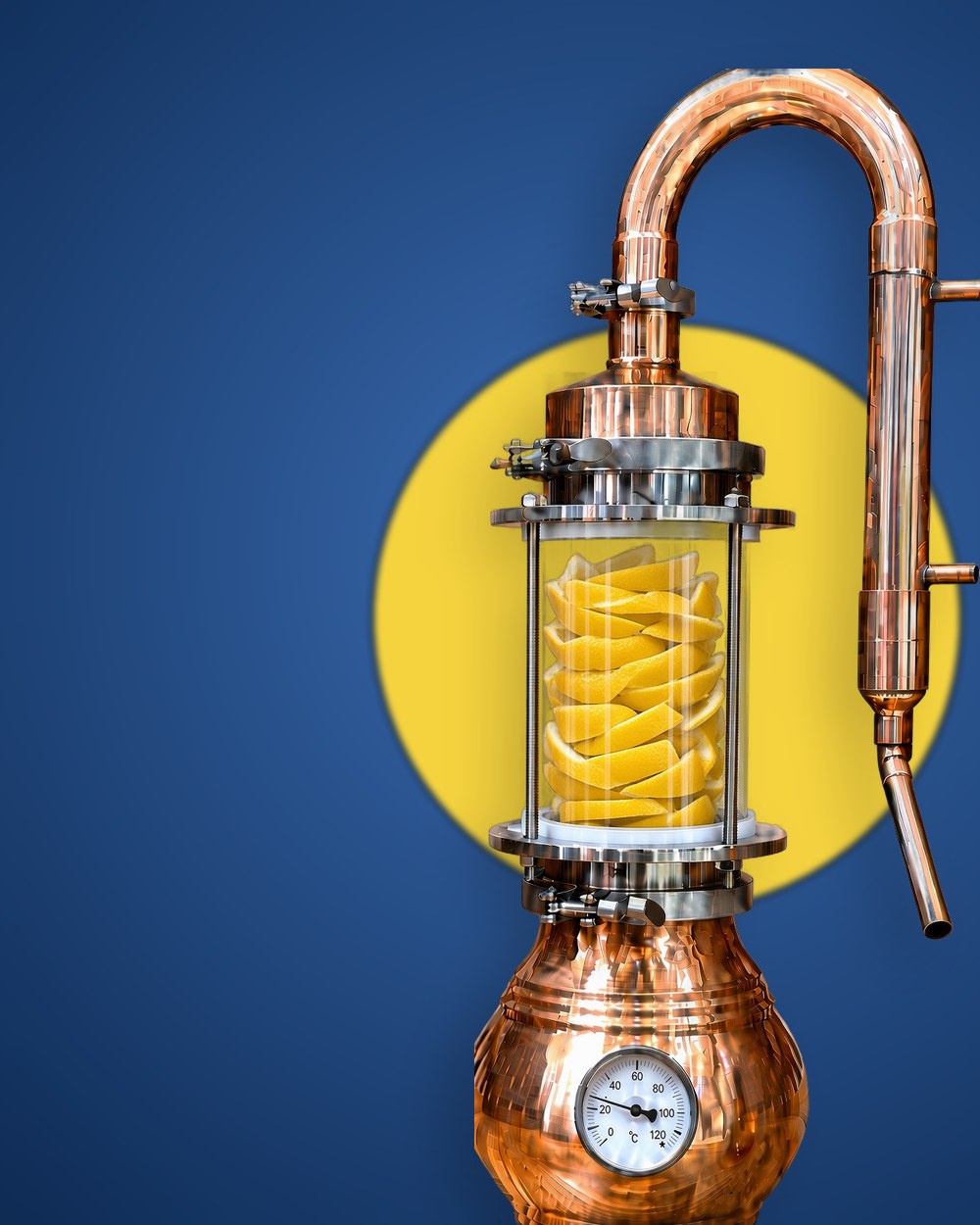
Lemon (Citrus limon) is originally from northeast India and is now grown widely around the Mediterranean. Its scent is so familiar that it is easy to forget how special it is to capture it yourself.
The part you use is the fresh peel. The aroma sits in tiny oil glands in the yellow outer layer, the zest. The white pith underneath has almost no scent and only adds bitterness, so peel thinly or use a zester.
Most lemon essential oil you find in shops is cold-pressed: the peel is pressed mechanically and the oil is collected without heat. In a copper still you can also steam distill the zest. The result is a distilled lemon oil and, just as interesting, a lemon hydrosol. Distilled lemon oil smells a little softer and cleaner than the cold-pressed version.
The oil is pale greenish yellow, light and fresh, and slowly turns darker with time. Its main component is limonene, together with pinene, terpinene, citral, linalool, citronellal, geraniol and sabinene. Citral is what gives lemon its sharp, unmistakable top note.
A practical tip: use unwaxed, organic lemons if you can, and peel them on the day you distill. Cut the zest into small strips so the steam reaches every piece, and fill the basket loosely. Store the oil in a dark, well-closed bottle, because citrus oils age faster than most.
Would you try distilling lemon peel? It is a lovely way to use the lemons from your kitchen.