
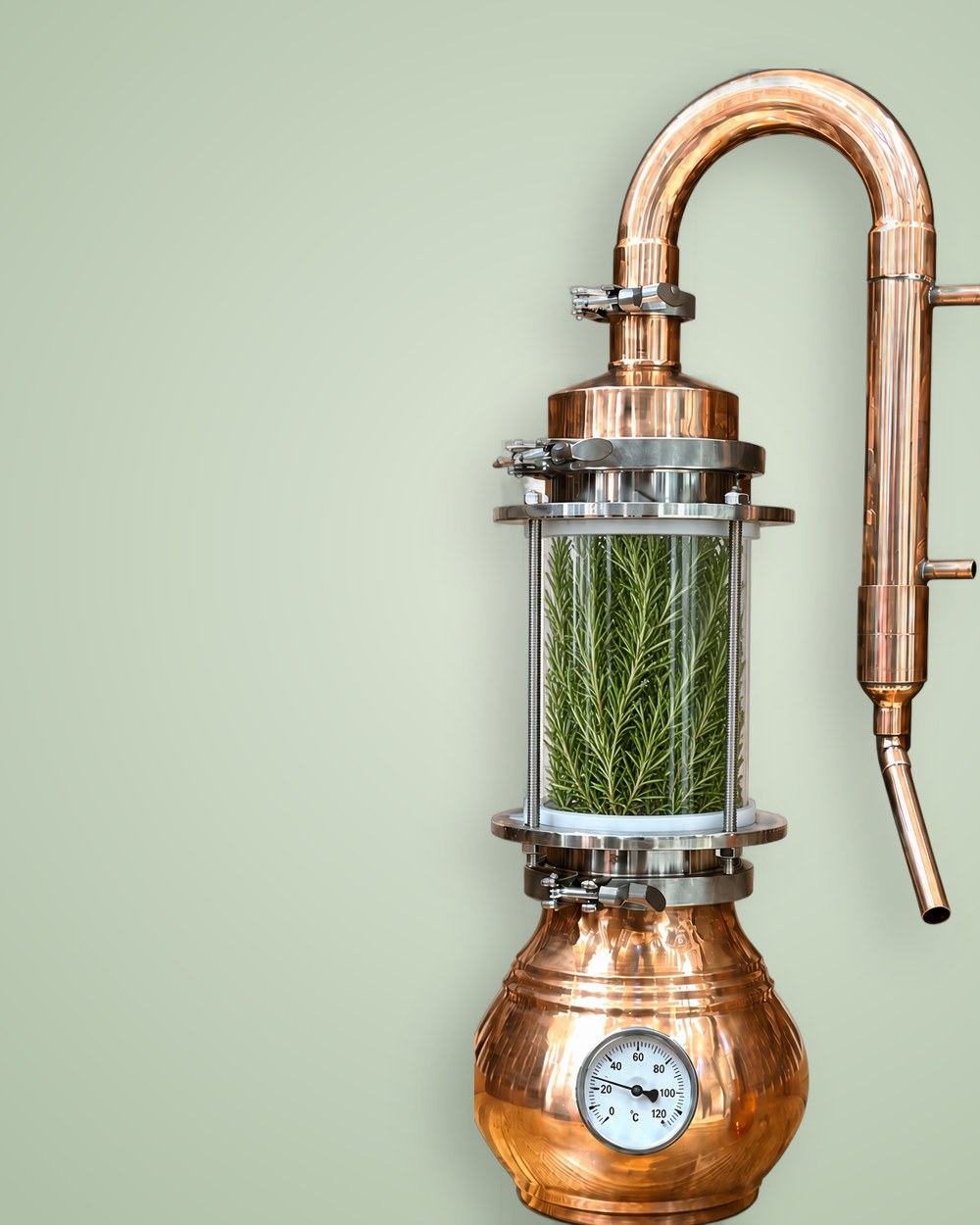
Rosemary (Salvia rosmarinus, long known as Rosmarinus officinalis) is an evergreen Mediterranean shrub with narrow leaves and pale blue flowers. It grows easily in a sunny, well-drained spot, even in a pot on a Dutch balcony, which makes it one of the best plants to start distilling with.
For distillation you use the leaves and the young sprigs. They give a fresh, herbal essential oil and a clear, aromatic hydrosol. Rosemary is generous: even a small still filled with sprigs from one healthy shrub gives a clear layer of oil on top of the hydrosol.
The best time to harvest is summer, on a dry morning after the dew has gone. You can distill the sprigs fresh, or dry them in small bundles in the shade. Dried rosemary keeps well for up to a year in a dark glass jar, so you can distill in winter too.
Before filling the basket, cut long sprigs into pieces of a few centimetres. This helps the steam reach every leaf. Do not press the plant material too tightly, steam always finds the easiest route, and a packed basket leaves dry pockets behind.
Rosemary is also a lovely plant to watch in a glass column. The needle-like leaves darken slightly as the steam passes through, and the scent fills the room long before the first drops reach the receiving flask.
Do you grow rosemary at home? It may be the easiest first plant for your still.